
Exploring Madeira by car is one of the most rewarding ways to experience the island. From dramatic coastal cliffs to winding mountain roads, driving here offers unmatched freedom and access to hidden gems. However, Madeira’s unique terrain and road infrastructure require a slightly different approach compared to mainland Europe.
To help you stay safe and confident on the road, the Regional Transport Authority has issued essential road safety tips. Below, we’ve highlighted the most important points every driver should know before setting off.
Official Driving Guidelines (Madeira)
Below you will find the official safety guidance provided by the transport authorities. We strongly recommend reviewing these before driving on the island.
Slide 1
Official Madeira driving recommendations including road safety rules, speed limits, and best practices for navigating the island safely
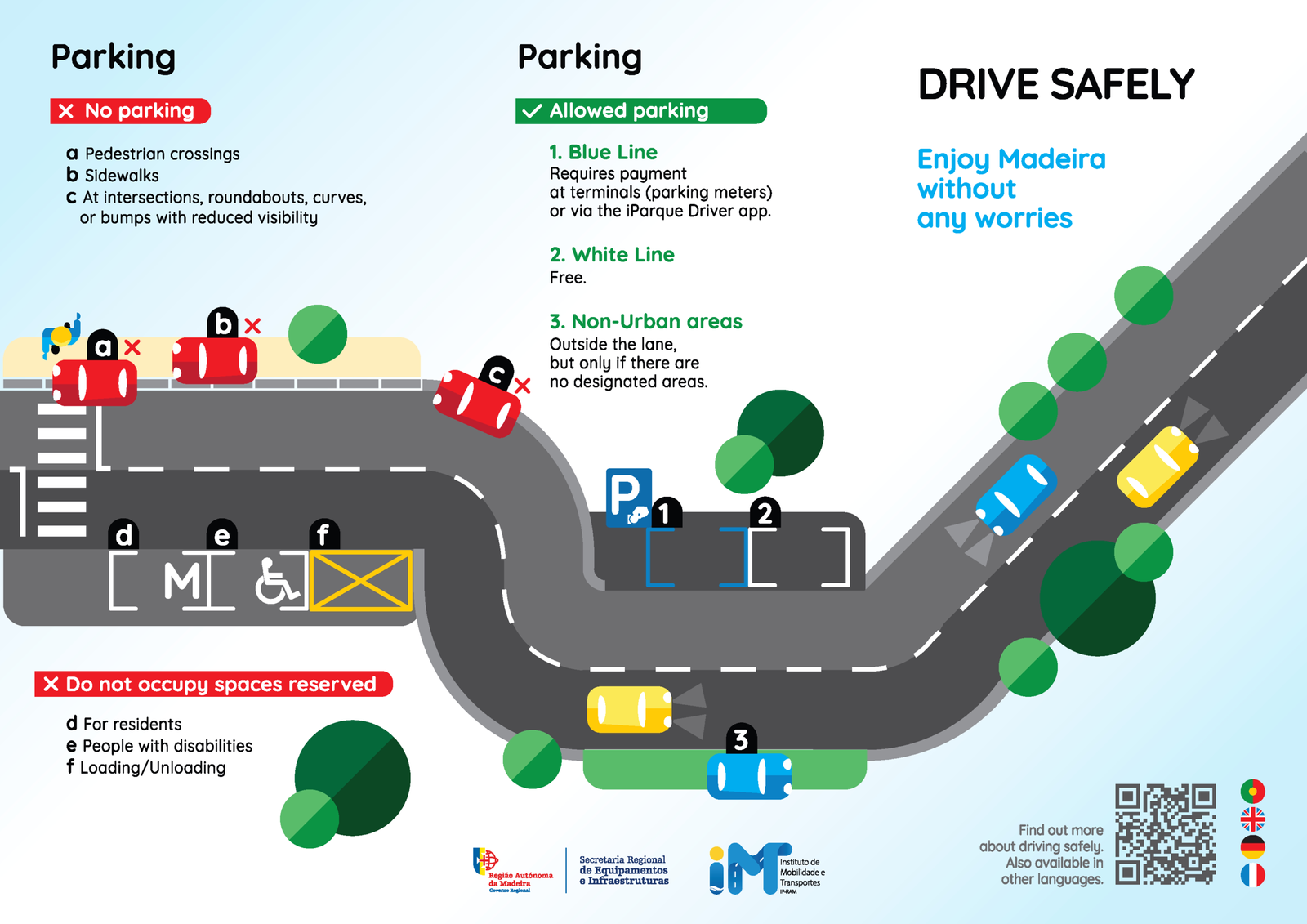
Official driving guidelines in Madeira provided by the regional transport authority
Slide 2
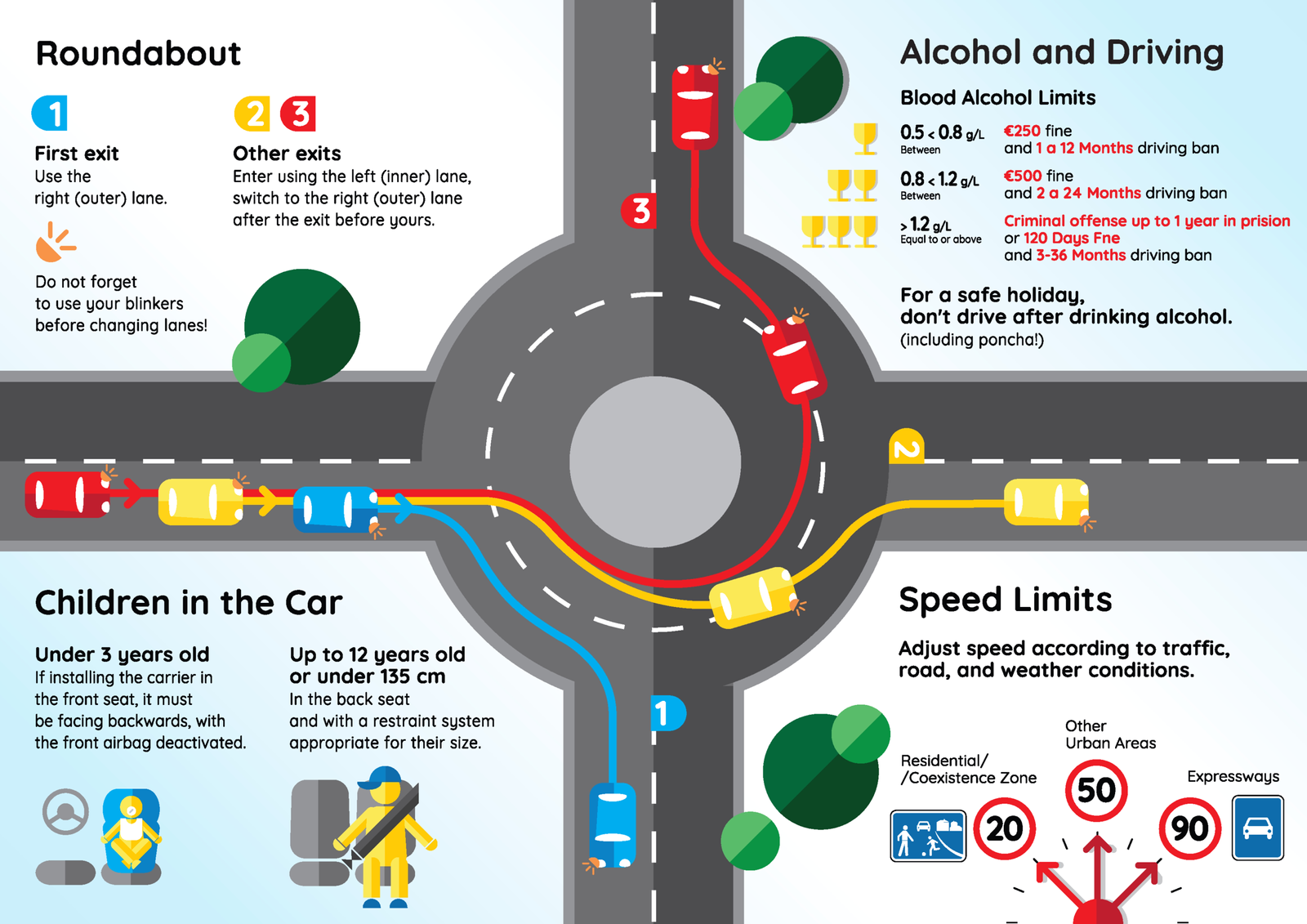
You can also download the full document here:
[ PDF_IMT5035 desd_boas_praticas_conducao_EN – Download PDF]
The official guidance covers the fundamentals. The sections below expand on the practical points that most visitors find useful once they are actually on the road.
1. The road network: VR1, ER roads and the old coastal routes
Madeira’s road system has three main layers:
- VR1 (Via Rápida) – the modern dual-carriageway expressway that runs along much of the south coast and connects the main towns and the airport. It is generally the fastest and easiest route.
- Regional roads (ER) – the numbered secondary network that climbs into the mountains and serves the north coast and interior villages. These roads are well maintained but frequently steeper and more winding.
- Older coastal and village roads – narrower, sometimes single-lane sections with limited passing places. These often provide the most scenic access to viewpoints and trailheads.
There are no tolls on any public roads in Madeira, including the VR1 and all tunnels.
Most visitors spend the majority of their time on the VR1 and the better ER roads. The older, narrower routes require more attention and slower speeds.
2. Speed limits and what is actually enforced
Standard limits (unless otherwise signed) are:
| Road type | Typical limit |
|---|---|
| Urban / built-up areas | 50 km/h |
| Outside built-up areas | 90 km/h |
| Expressways (VR1 and similar) | 100 km/h |
Limits change frequently according to the terrain, especially before tunnels, on viaducts and on mountain sections. Always follow the posted signs. Fixed and mobile speed cameras are in use, particularly on the VR1.
In adverse conditions (rain, fog, wet roads) you are expected to reduce speed to a safe level regardless of the posted limit.
3. Tunnels: lights, lanes and sudden weather changes
Madeira has a large number of tunnels. Many are long and some branch inside.
- Headlights must be on inside tunnels at all times (even if the car has automatic lights).
- Speed limits often change at the entrance or inside the tunnel — watch for the signs.
- Weather can change dramatically when you exit a tunnel (fog, wind or sudden brightness).
Keep a steady speed, maintain a safe distance and be prepared for the exit conditions.
4. Gradients: engine braking and the mistake most visitors make
Long, steep descents are common, especially when leaving the central mountains or the north coast. The most frequent problem is overheating the brakes by relying only on the foot brake.
Use a lower gear so that engine braking helps control the speed. This is standard advice on the island and is also emphasised in the official guidance. If you smell burning brakes, stop in a safe place and allow them to cool naturally — do not pour water on the discs.
On very steep narrow climbs, the vehicle going uphill generally has practical priority because restarting on a steep gradient is harder.
5. Narrow roads and passing etiquette in villages
Many village and mountain roads are single-track with occasional passing places. When two vehicles meet:
- Slow down early.
- Use the nearest passing place.
- A short, polite horn beep on blind bends is a local habit to alert oncoming traffic — it is not considered aggressive.
Do not block entrances, driveways or narrow village streets. If in doubt, reverse to the nearest safe place rather than forcing a pass.
6. Roundabouts, priorities and local driving style
Roundabouts are very common. Vehicles already circulating have priority. Choose the correct lane according to your exit and signal clearly when leaving.
Local driving can feel more assertive than in some northern European countries, particularly in Funchal. Keep a safe following distance, expect occasional sudden manoeuvres and stay calm. The same rules of priority and signalling still apply.
7. Parking in Funchal: blue zones, garages and free options
Parking is one of the points that generates the most questions from visitors.
- Blue lines / blue zones – paid parking. Use the nearest meter or the local parking app (commonly iParque or similar). Check the tariff and maximum stay on the machine or sign.
- White lines – generally free, but spaces marked with the letter “M” are reserved for residents.
- Yellow lines – no parking.
- Reserved, taxi or loading zones – respect the markings.
Street parking in the centre is limited and often tight. For longer stays many drivers prefer the underground or multi-storey garages near the marina, the old town or the main shopping areas. These remove the stress of finding a street space and of watching the meter.
Always check the local signs — rules can vary by street and by time of day.
8. Parking at viewpoints and trailheads
Most major viewpoints and popular levada starting points have dedicated parking areas, usually free. The practical issue is capacity:
- Popular spots (Pico do Arieiro, Cabo Girão, certain north-coast trailheads) fill early on sunny days and at weekends.
- Arrive early or later in the afternoon when possible.
- Do not park on bends, in passing places or on yellow lines even if the official car park is full.
9. Fuel stations, opening hours and payment
Fuel stations are well distributed along the main routes and in the larger towns. Most accept cards; some smaller stations may prefer cash. Unleaded petrol is “gasolina sem chumbo”; diesel is “gasóleo”.
Opening hours are generally long on the main routes, but smaller stations in villages may close earlier or have restricted Sunday hours. It is sensible to refuel when the tank is around one-quarter full rather than waiting until the last moment, especially if you are heading into the mountains.
10. Practical parking cheat-sheet for the main sights
| Location / type of stop | Practical note |
|---|---|
| Funchal centre (longer stay) | Prefer a garage / multi-storey car park |
| Funchal short stop | Blue zone + meter or app; check maximum stay |
| Pico do Arieiro | Limited spaces – arrive early |
| Cabo Girão | Dedicated car park, fills at peak times |
| North-coast trailheads | Small free parks – early arrival recommended |
| Village centres | Use marked spaces only; avoid blocking entrances |
Why Rent a Car with Girassol.Rent?
At Girassol.Rent, we don’t just provide vehicles — we ensure you’re fully prepared for driving in Madeira.
✔ Well-maintained, island-ready vehicles
✔ Transparent conditions with no hidden fees
✔ Local driving advice and support
✔ Flexible pick-up and drop-off options
Our goal is to make your driving experience in Madeira safe, smooth, and enjoyable.
🔥 FAQ – Frequently Asked Questions About Driving in Madeira
Is it difficult to drive in Madeira?
The main roads and the VR1 are straightforward. Mountain and older coastal roads require more attention because of gradients, curves and occasional narrow sections. Most visitors adapt quickly if they drive calmly and follow the signs.
What side of the road do people drive on?
On the right, as in mainland Portugal.
Are there many roundabouts?
Yes. Vehicles already on the roundabout have priority.
What are the usual speed limits?
50 km/h in urban areas, 90 km/h outside built-up areas, and typically 100 km/h on the VR1 expressway (always follow the posted signs).
Do I need a special car?
A car with enough power for the climbs and an automatic gearbox is more comfortable for most visitors. Manageable dimensions help on narrow village streets.
Is parking difficult in Funchal?
Street parking is limited. Garages are the simplest solution for longer stays in the centre.
Are there tolls?
No. All public roads and tunnels are free.
Final thoughts
Driving in Madeira is enjoyable once you understand the terrain and the local conventions. Follow the official safety guidance, use lower gears on long descents, respect the narrow roads and plan parking in Funchal and at popular viewpoints. With a little preparation the roads become part of the pleasure of the island rather than a source of stress.
When you collect your car, the team at the office can also answer practical questions about parking or a specific route if you need a quick local tip before you set off.
If you’re planning your trip, make sure to choose a reliable car hire provider and take a few minutes to familiarise yourself with the rules of the road.
Safe travels and enjoy Madeira.
5 responses